

Today I wanted to share with you my latest published research article, on using grounding to help recover from trauma.
If you’ve followed my blog for any length of time, you know that I talk about trauma recover a lot, because I personally (along with both of my children) had a profound trauma about 15 years ago from which we are all still healing.
Because of my direct experience with using grounding to help facilitate our own recovery, I was able to notice first hand how grounding helped reduce anxiety, helped reduce muscle tension from persistent muscle bracing from trauma, helped improve sleep, helped improve digestion (which shuts down or goes haywire during trauma) and so much more. As a result, I’ve incorporated grounding into the treatment plan of everyone who has gone through a major stressor, and I’ve got it as an integral part of my Trauma Resiliency & Recovery Online Class (which you can check out right here.)

If you want help using grounding to heal from your own traumas, that class is a wonderful, research guided class that can be extremely valuable — let me walk you through it personally right here.
If you want more about the science behind how grounding helps, I wrote a review article for you, which I’m sharing right here. Please feel free to share this article with anyone you know who could use a little encouragement in their healing journey: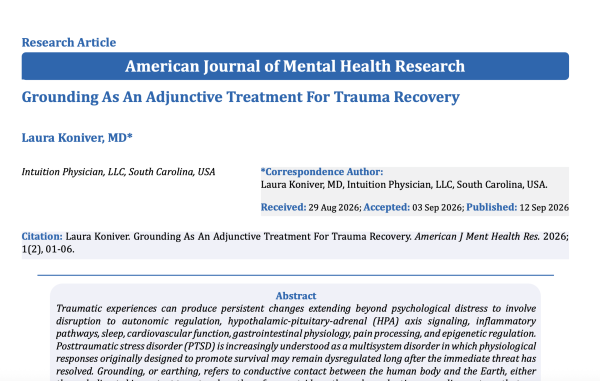
Abstract
Traumatic experiences can produce persistent changes extending beyond psychological distress to involve disruption to autonomic regulation, hypothalamic-pituitary-adrenal (HPA) axis signaling, inflammatory pathways, sleep, cardiovascular function, gastrointestinal physiology, pain processing, and epigenetic regulation. Posttraumatic stress disorder (PTSD) is increasingly understood as a multisystem disorder in which physiological responses originally designed to promote survival may remain dysregulated long after the immediate threat has resolved. Grounding, or earthing, refers to conductive contact between the human body and the Earth, either through direct skin contact to natural earth surfaces outside or through conductive grounding systems that are connected to the Earth through conductive wiring. Preliminary clinical and physiological studies suggest that grounding may influence several processes relevant to trauma physiology, including autonomic regulation and heart rate variability (HRV), vagal tone, sleep, cortisol rhythmicity, inflammatory activity, blood rheology, pain, and mood. No clinical trials have investigated grounding as a treatment for PTSD or demonstrated reversal of trauma-associated neural or epigenetic alterations directly, as of yet. Nevertheless, the overlap between physiological abnormalities described in trauma-related disorders and the physiological health improvements examined in grounding studies provides a rationale for systematic investigation. This narrative review examines trauma as a persistent brain-body physiological state, reviews the available grounding literature, proposes potential mechanisms through which grounding might complement established trauma therapies, and identifies priorities for future clinical research. Grounding should currently be regarded as a powerful potential adjunctive treatment rather than a replacement for evidence-based trauma treatment.
Keywords: grounding, earthing, trauma, posttraumatic stress disorder, PTSD, autonomic nervous system, heart rate variability, HRV, vagal tone, inflammation, cortisol, HPA axis, epigenetics, sleep, stress, chronic pain, mental health, adjunctive therapy, holistic treatment, nature, earth
Introduction
The human stress response is fundamentally adaptive. During acute threat, sympathetic activation, altered breathing, increased cardiovascular output, changes in muscle tone, redistribution of blood flow, suppression of nonessential digestive activity, heightened vigilance, and activation of neuroendocrine stress pathways can improve an individual’s ability to survive. Ideally, when the threat resolves, these systems return toward physiological homeostasis.
Trauma-related illness illustrates what may occur when elements of this response persist or are repeatedly reactivated after the original threat has passed. PTSD is characterized not only by recollection of a traumatic event but also by intrusive symptoms, avoidance, negative alterations in cognition and mood, and changes in arousal and reactivity. Increasing evidence indicates that these manifestations are accompanied by measurable changes across multiple physiological systems, including autonomic function, immune signaling, HPA-axis regulation, cardiovascular health, gastrointestinal function, sleep, pain processing, and epigenetic regulation 1-8.
This distinction is clinically important. Trauma is experienced psychologically, but its consequences are not confined to conscious thought. A person may cognitively recognize that a traumatic event has ended while portions of the nervous system continue to respond as though threat remains imminent, due to a decrease in neuroplasticity and more easily reactivated neural loop patterns. As a result, persistent hypervigilance, exaggerated startle responses, sleep disturbance, muscle tension, autonomic symptoms, gastrointestinal dysfunction, pain, and dissociation can be understood, at least in part, within a larger framework of maladaptive persistence of protective physiology and a prolonged decrease in neuroplasticity.
This review explores the hypothesis that grounding, also called earthing, may provide a useful physiological adjunct to established trauma treatment. Grounding in this context specifically refers to conductive connection of the human body with the Earth and should be distinguished from psychological “grounding techniques” used in psychotherapy to orient an individual to the present environment.
Preliminary grounding research suggests significant positive effects in several physiological domains that are also dysregulated in trauma-related illness. This overlap warrants investigation into whether grounding might assist the body and the brain in transitioning from persistent defensive physiology toward a more regulated, neuroplastic state in which established psychological and somatic therapies can operate.
Trauma as a Persistent Brain-Body State
During acute threat, survival takes priority over long-term maintenance. Muscles contract in preparation for action. Cardiovascular activity changes to support immediate metabolic demands. Digestion may slow. Attention narrows toward potential danger. Sleep becomes less physiologically appropriate when vigilance is necessary. These reactions are adaptive when danger is present.
The difficulty arises when defensive responses persist after danger has passed. Contemporary neurobiological models of PTSD implicate abnormalities within highly conserved neural systems governing fear learning, threat detection, memory, stress, and reward.9 Fear conditioning and extinction research further suggests that persistence of traumatic responses involves altered learning and extinction processes rather than simply an individual’s conscious inability to “move on.”10.
This provides a physiological framework for an experience frequently described by trauma survivors: intellectually knowing that one is safe while the body continues responding as if one is not. Such a state can create cumulative physiological burden and may contribute to long-term changes across autonomic, inflammatory, endocrine, sleep, pain, and metabolic systems.
Grounding Support For Autonomic Dysregulation
One of the clearest physiological findings in PTSD is autonomic dysregulation. Heart rate variability provides a noninvasive measure of beat-to-beat cardiac variability influenced by autonomic regulation. A 2020 meta-analysis found lower indices of parasympathetic HRV among individuals with PTSD.11 More recently, a 2026 multilevel meta-analysis synthesizing 24 studies, 2,537 participants, and 34 effect sizes again found vagally mediated HRV to be consistently reduced in PTSD 12.
These observations are relevant to grounding because several small studies have examined autonomic measures during conductive Earth contact. Chevalier and Sinatra reported improvement in HRV during grounding compared with sham grounding, and the improvements in HRV continued to improve over a 40 minute period of time, suggesting longer grounding sessions may offer more autonomic regulation.13 Passi et al studied electrically grounded preterm infants and reported a 67% increase in HRV, used as an index of vagal tone. Vagal tone returned toward pregrounding values following disconnection from the earth 14.
Impaired vagally mediated autonomic regulation is a reproducible feature of PTSD, while preliminary grounding studies suggest that electrical grounding can positively impact autonomic measures. A direct sham-controlled trial in trauma-exposed adults could test whether grounding shortens autonomic recovery after standardized stress provocation or improves resting HRV over longer periods of time.
Grounding For HPA Axis Regulation
Trauma is sometimes described as producing chronically elevated cortisol, but the medical literature reveals a more complicated picture. PTSD is associated with dysregulation of the HPA axis rather than uniformly elevated cortisol, because a prolonged state of trauma hyperarousal progresses into adrenal fatigue and a bottoming out of cortisol levels. In fact, a meta-analysis of 108 studies involving 6,484 participants found significantly lower morning and 24-hour cortisol concentrations in PTSD compared with controls.15. These findings demonstrate why cortisol abnormalities in trauma should be described as dysregulation rather than simply chronic hypercortisolemia.
Grounding research has also examined cortisol rhythmicity. In an early pilot study, Ghaly and Teplitz measured diurnal cortisol profiles in 12 participants with sleep dysfunction, pain, and stress before and during 8 weeks of grounded sleep. Grounding was associated with complete normalization of diurnal cortisol patterns as well as subjective improvements in sleep, pain, and stress.16 An over all review of grounding research provides support to the hypothesis that the earth acts as a hormonal “clock setter” via it’s normalization of cortisol and it’s ability to improve circadian rhythm 17.
Because PTSD involves HPA-axis abnormalities and grounding has been associated with changes in cortisol rhythmicity, future trials could determine whether grounding influences the cortisol awakening response, diurnal slope, nocturnal cortisol, or other HPA-axis measures specifically in trauma-exposed populations.
Grounding For Sleep Support
Sleep disturbance is one of the most persistent physiological consequences of trauma. Insomnia, fragmented sleep, nightmares, nocturnal hyperarousal, and impaired restorative sleep can reinforce daytime emotional dysregulation and autonomic activation in those suffering from PTSD.
Several grounding studies have reported sleep-related improvements. The Ghaly and Teplitz pilot study reported subjective sleep improvement during grounded sleep.16 In a placebo-controlled pilot study of patients with mild Alzheimer disease, Lin et al reported improved Pittsburgh Sleep Quality Index scores following 12 weeks of grounding compared with sham grounding.18 More recently, a randomized, double- blind, placebo-controlled study involving 60 participants evaluated use of a grounding mat for 6 hours daily over 31 days. Grounding was associated with improvements in Pittsburgh Sleep Quality Index, insomnia severity, daytime sleepiness, perceived stress, and actigraphy-measured total sleep time compared with the control condition. 19.
For trauma research, sleep remains an especially important candidate pathway. Even modest improvement in sleep could plausibly influence emotional regulation, pain, autonomic stability, and resilience, but that hypothesis requires testing in trauma-specific populations.
Grounding And Immune Regulation
Trauma also extends into immune physiology. Meta-analytic evidence demonstrates elevations in multiple inflammatory markers among individuals with PTSD. Passos et al reported elevations in markers including interleukin-6, interleukin-1β, and interferon-γ, with subgroup findings involving tumor necrosis factor-α. 20 A subsequent systematic review and meta-analysis similarly identified elevations in inflammatory and immune markers including TNF-α, C-reactive protein, interferon-γ, and white blood cell counts in PTSD 21.
Grounding has been proposed as an intervention capable of modifying inflammatory physiology. Oschman et al reviewed experimental and clinical reports and suggests there are positive changes in inflammation, immune responses, pain, and wound healing associated with grounding, including a near 60% drop in C-reactive protein levels, and up to a 20% reduction in inflammatory cytokines 22. Brown et al randomized healthy men undergoing eccentric exercise to grounding or sham grounding and reported up to a 20% reduction in inflammatory cytokines, along with other significant differences in several hematologic measures. 23, 24. Müller et al later reported faster recovery and less pronounced markers of muscle damage and inflammation after downhill running in grounded participants, such as, IP-10, MIP-1α, and sP-Selectin, suggesting grounding has a protective effect on the body during physical stress 25.
By reducing inflammatory amplification loops, grounding may indirectly help to reverse the prolonged immunological changes that trauma inflicts. These studies involve exercise-induced tissue stress rather than PTSD and cannot be directly extrapolated to trauma-related inflammation. The overlap nonetheless identifies measurable targets for future studies, including high-sensitivity C-reactive protein, interleukin-6, tumor necrosis factor-α, interleukin-1β, and other inflammatory or neuroimmune markers before and after standardized grounding protocols.
Grounding To Decrease Persistent Muscle Tension
PTSD and chronic pain from muscle tension frequently coexist. PTSD is particularly prevalent among individuals with chronic widespread pain, and contemporary evidence suggests a complex, bidirectional relationship between PTSD symptoms and pain. 26,27 From a clinical perspective, one of the most immediately recognizable somatic expressions of stress is muscular bracing. Jaw clenching, neck and shoulder tension, headache, chest-wall tension, and generalized muscular guarding can accompany persistent autonomic arousal.
Grounding studies have reported outcomes relevant to pain and physical function. In a randomized controlled trial involving massage therapists, grounded participants experienced improvements in pain, physical function, energy, fatigue, and mood while grounded.28 Exercise-recovery studies have additionally identified differences in soreness and muscle-damage markers after grounding. 23, 24.
It is premature to conclude that grounding directly releases trauma-associated muscle tension or rewires neural circuits responsible for chronic guarding. Objective electromyographic studies in trauma populations could, however, determine whether grounding produces acute changes in resting muscle activity during hyperarousal and whether repeated grounding changes the recurrence of muscular guarding over time.
Grounding And Cardiovascular Function
The cardiovascular consequences of persistent traumatic stress are clinically important. A 2024 systematic review and meta-analysis encompassing more than 335,000 participants found PTSD associated with increased risk of cardiovascular disease, myocardial infarction, and stroke 29. These findings reinforce the concept that trauma can have consequences extending substantially beyond psychiatric symptoms.
Grounding has been associated with improvements to several cardiovascular measurements in small experimental studies. Chevalier et al reported increased red blood cell zeta potential and reduced red blood cell aggregation after 2 hours of grounding in 10 healthy adults. 30 A separate double-blind pilot study reported changes in peripheral blood-flow patterns following grounding. 31 A double-blind physiological study also found changes in pulse, perfusion, and oxygenation measures during grounding compared with sham grounding 32. A case history review found that grounding could reduce systolic levels by up to 23%, with an average decrease in systolic blood pressure of 14% in 10 study participants 33.
These observations are preliminary and should not be interpreted as evidence that grounding prevents cardiovascular disease. They do support inclusion of blood pressure, HRV, endothelial function, vascular measures, and hemorheologic endpoints in future trauma-grounding trials.
Grounding And Neuroplasticity
Trauma can produce highly efficient threat-response pathways. From an evolutionary perspective this is adaptive: after serious danger, rapid recognition and response to similar cues may increase survival. When these pathways remain excessively sensitive, however, cues resembling the original event can initiate physiological responses disproportionate to present danger.
Modern models of PTSD emphasize abnormalities in fear conditioning, extinction, memory consolidation, reconsolidation, and neural circuits involving the amygdala, hippocampus, prefrontal cortex, and related networks.9,10,34. This framework provides a rigorous way to express a common clinical observation: trauma can bias the nervous system toward repeatedly selecting survival responses, while recovery requires greater flexibility in responding to present conditions.
There is currently insufficient evidence to claim that grounding directly restores neuroplasticity, rewires fear circuits, or permanently removes trauma responses. A more testable proposal is that grounding may modify the physiological context in which neuroplasticity and therapeutic learning occur. Sokal et al used EEG monitoring of the brain and found that grounding shifted brain wave patterns nearly instantaneously 35. A 2023 medical review explores the many potential pathways in which grounding may improve neuroplasticity and support healthy neurological function, including via decreased inflammation, boosted neurotransmitters, improved neurosignalling via earth-brain cohesion of the cerebral cortex and more. 36, 37, 38.
If grounding increases parasympathetic activity, improves sleep, alters inflammatory signaling, and/or decreases physical arousal, it could potentially create a physiological state more permissive to extinction learning, cognitive flexibility, somatic processing, and ultimately, boosted neuroplasticity.
Grounding As An Adjunctive Treatment
Grounding should not be positioned against established trauma treatments. Evidence-based psychotherapy, appropriate pharmacotherapy, EMDR, exposure-based treatment, cognitive interventions, somatic approaches, sleep treatment, exercise, and social support address different components of a complex condition.
A more useful clinical model is additive. Trauma-focused psychotherapy can address memory, cognition, meaning, avoidance, and learned fear. Somatic approaches can address bodily responses. Pharmacotherapy can target selected symptoms and neurochemical systems. Grounding may potentially provide another layer: passive physiological regulation through conductive contact with the Earth.
However, many effective trauma therapies require active cognitive or behavioral participation. Trauma-focused psychotherapy, exposure-based interventions, cognitive behavioral therapy, eye movement desensitization and reprocessing (EMDR), mindfulness, breathwork, biofeedback, and somatic approaches can all be valuable components of treatment. Grounding may offer an advantage as an adjunctive treatment because conductive contact itself requires no cognitive effort.
This distinction may be relevant during acute hyperarousal, panic, overwhelm, or dissociative symptoms, when deliberate cognitive strategies can be difficult to initiate. An individual does not need to alter thoughts, remember a sequence of breathing instructions, or successfully generate a meditative state in order to maintain conductive contact with the Earth. Because no randomized clinical trial has established grounding as a treatment for PTSD, the appropriate current question is whether grounding can serve as a low-burden adjunct capable of influencing selected physiological systems disrupted by trauma.
The Future Of Grounding Research
Grounding research raises the possibility that conductive Earth contact influences several systems relevant to trauma pathophysiology, particularly autonomic regulation, HRV, vagal tone, sleep, pain, mood, inflammatory physiology, and circulation.13, 16-19, 22-25, 28, 30-33.
Direct clinical investigation is now required. An appropriately designed trial could randomize adults with PTSD to verified grounding or visually identical sham grounding. Both groups could receive identical standard-of-care trauma treatment so that grounding is evaluated as an adjunct rather than a substitute. Outcome measures should include validated PTSD symptom scales and objective physiological endpoints such as resting and reactive HRV, respiratory rate, electrodermal activity, sleep actigraphy, polysomnography where feasible, diurnal cortisol profiles, inflammatory cytokines, pain measures, and gastrointestinal symptoms.
More ambitious studies could examine functional neuroimaging during fear processing and extinction, electroencephalography, neurotrophic markers, epigenome-wide DNA methylation, stress-related gene regulation, and longitudinal measures of biological aging.
Acute experiments could deliberately evaluate grounding during standardized stress provocation to determine whether grounding shortens the time required for autonomic parameters to return toward baseline.
As of yet, the grounding literature remains preliminary. Many studies involve small samples, selected populations, short observation periods, surrogate physiological outcomes, or imperfect blinding. Several influential studies originate from a relatively small group of investigators, and independent replication remains limited. Some studies have industry involvement or other potential conflicts of interest.
Equally important, grounding studies have not evaluated participants specifically because of PTSD or trauma exposure. Evidence that grounding influences HRV, vagal tone, sleep, mood, pain, circulation, cortisol, or inflammatory parameters cannot be assumed to demonstrate treatment of PTSD. The convergence of trauma biology and grounding research provides biological plausibility and generates hypotheses; it does not establish clinical efficacy.
Conclusion
Trauma is not confined to memory. Its effects can extend throughout nervous, endocrine, immune, cardiovascular, gastrointestinal, musculoskeletal, and sleep systems and may become biologically embedded through changes in gene regulation. Modern trauma research increasingly supports a model in which persistent defensive physiology contributes to the long-term health burden associated with PTSD. Recovery therefore involves more than forgetting an event or thinking differently about it. At a physiological level, recovery requires restoration of the capacity to respond flexibly to the present environment.
Grounding is an intriguing candidate adjunct because preliminary studies suggest a positive effects across several systems that are also disrupted in trauma, including autonomic regulation, vagal tone, HRV, sleep, cortisol rhythmicity, inflammation, circulation, pain, and mood. Conductive contact also requires minimal cognitive effort, which may make it accessible during periods of heightened physiological arousal.
The evidence does not yet demonstrate that grounding treats PTSD, reverses trauma-related epigenetic alterations, or directly restores neuroplasticity. Those questions remain unanswered, but they are testable. The convergence of emerging trauma biology with the existing grounding literature provides sufficient rationale for controlled trials specifically designed to determine whether grounding can reduce physiological dysregulation, complement established trauma therapies, and improve recovery in trauma-exposed individuals. Grounding deserves rigorous investigation as one potentially simple way of supporting that process.
You can print out copies of this article for yourself right here — as a Free Printable PDF:

References
1. Golubeva E, Zeltser A, Zorkina Y, et al. Epigenetic alterations in post-traumatic stress disorder: comprehensive review of molecular markers. Complex Psychiatry. 2024;10(1-4):71-107.
2. Alahmad R, Hinchey LM, Shaikh M, Amirsadri A, Javanbakht A. Gene expression and epigenetic changes in post-traumatic stress disorder, depression, and anxiety in first responders: a systematic review. J Psychiatr Res. 2025;182:438-451.
3. Zhao X, Katrinli S, McCormick BM, et al. PTSD and epigenetic aging: a longitudinal meta-analysis. Psychol Med. 2025;55.
4. Speer KE, Semple S, Naumovski N, D’Cunha NM, McKune AJ. HPA axis function and diurnal cortisol in post-traumatic stress disorder: a systematic review. Neurobiol Stress. 2019;11:100180.
5. Passos IC, Vasconcelos-Moreno MP, Costa LG, et al. Inflammatory markers in post-traumatic stress disorder: a systematic review, meta-analysis, and meta-regression. Lancet Psychiatry. 2015;2(11):1002-1012.
6. Ng QX, Soh AYS, Loke W, Venkatanarayanan N, Lim DY, Yeo WS. Systematic review with meta-analysis: the association between post-traumatic stress disorder and irritable bowel syndrome. J Gastroenterol Hepatol. 2019;34(1):68-73.
7. Akosile W, Colquhoun D, Young R, Lawford B, Voisey J. The association between post-traumatic stress disorder and coronary artery disease: a meta-analysis. Australas Psychiatry. 2018;26(5):524-530.
8. Siqveland J, Hussain A, Lindstrøm JC, Ruud T, Hauff E. Prevalence of posttraumatic stress disorder in persons with chronic pain: a meta-analysis. Front Psychiatry. 2017;8:164.
9. Zhang Y, Liu F, Chen X, et al. The neural circuits and molecular mechanisms underlying fear dysregulation in posttraumatic stress disorder. Front Neurosci. 2023;17:1281401.
10. Rothbaum BO, Davis M. Treatment approaches for posttraumatic stress disorder derived from basic research on fear extinction. Biol Psychiatry. 2025;97(4):382-391.
11. Schneider M, Schwerdtfeger A. Autonomic dysfunction in posttraumatic stress disorder indexed by heart rate variability: a meta-analysis. Psychol Med. Cambridge University Press 2020.
12. Tucker RC, et al. A multi-level meta-analysis of vagally-mediated heart rate variability and post-traumatic stress disorder. Neurosci Biobehav Rev. 2026;106585.
13. Chevalier G, Sinatra ST. Emotional stress, heart rate variability, grounding, and improved autonomic tone: clinical applications. Integr Med. 2011;10(3).
14. Passi R, Doheny KK, Gordin Y, Hinssen H, Palmer C. Electrical grounding improves vagal tone in preterm infants. Neonatology. 2017;112(2):187-192.
15. Schumacher S, Niemeyer H, Engel S, et al. HPA axis regulation in posttraumatic stress disorder: a meta-analysis focusing on potential moderators. Neurosci Biobehav Rev. 2019;100:35-57.
16. Ghaly M, Teplitz D. The biologic effects of grounding the human body during sleep as measured by cortisol levels and subjective reporting of sleep, pain, and stress. J Altern Complement Med. 2004;10(5):767-776.
17. Koniver L. The Earth’s Role in Circadian Regulation: Grounding to Set Daily Cortisol Pattern. J Med – Clin Res & Rev. 2025; 9(8): 1-4.
18. Lin CH, Tseng ST, Chuang YC, Kuo CE, Chen NC. Grounding the body improves sleep quality in patients with mild Alzheimer’s disease: a pilot study. Healthcare (Basel). 2022;10(3):581.
19. Park, H. J., Lee, G. R., Kim, Y., Kim, J., Sohn, M., Kim, S. H., Rhie, S. J., Kim, K. R., & Shim, I. (2025). A randomized, double-blind, placebo-controlled study on the improvement of sleep quality with Earthing mat. Advances in Integrative Medicine, 12(3), Article 100458.
20. Passos IC, Vasconcelos-Moreno MP, Costa LG, et al. Inflammatory markers in post-traumatic stress disorder: a systematic review, meta-analysis, and meta-regression. Lancet Psychiatry. 2015;2(11):1002-1012.
21. Yang JJ, Jiang W. Immune biomarkers alterations in post-traumatic stress disorder: a systematic review and meta-analysis. J Affect Disord. 2020;268:39-46.
22. Oschman JL, Chevalier G, Brown R. The effects of grounding (earthing) on inflammation, the immune response, wound healing, and prevention and treatment of chronic inflammatory and autoimmune diseases. J Inflamm Res. 2015;8:83-96.
23. Brown R, Chevalier G, Hill M. Grounding after moderate eccentric contractions reduces muscle damage. Open Access J Sports Med. 2015;6:305-317.
24. Brown D, Chevalier G, Hill M. Pilot study on the effect of grounding on delayed-onset muscle soreness. J Altern Complement Med. 2010;16(3):265-273.
25. Müller E, Pröller P, Ferreira-Briza F, et al. Effectiveness of grounded sleeping on recovery after intensive eccentric muscle loading. Front Physiol. 2019; 10: 35.
26. Siqveland J, Hussain A, Lindstrøm JC, Ruud T, Hauff E. Prevalence of posttraumatic stress disorder in persons with chronic pain: a meta-analysis. Front Psychiatry. 2017;8:164.
27. PTSD and chronic pain: a systematic review and meta-analysis of mediation studies. J Pain. 2025;105589.
28. Chevalier G, Patel S, Weiss L, Chopra D, Mills PJ. The effects of grounding (earthing) on bodyworkers’ pain and overall quality of life: a randomized controlled trial. Explore (NY). 2019;15(3):181-190.
29. Padhi BK, Khatib MN, Serhan HA, Gaidhane AM, Rustagi S, Zahiruddin QS, Sharma RK, Satapathy P. Cardiovascular impact of post-traumatic stress disorder: A systematic review and meta-analysis. Curr Probl Cardiol. 2024 Aug;49(8):102632
30. Chevalier G, Sinatra ST, Oschman JL, Delany RM. Earthing (grounding) the human body reduces blood viscosity—a major factor in cardiovascular disease. J Altern Complement Med. 2013;19(2):102-110.
31. Chevalier, G. , Melvin, G. and Barsotti, T. (2015) One-Hour Contact with the Earth’s Surface (Grounding) Improves Inflammation and Blood Flow—A Randomized, Double-Blind, Pilot Study. Health, 7, 1022-1059
32. Chevalier G. Changes in pulse rate, respiratory rate, blood oxygenation, perfusion index, skin conductance, and their variability induced during and after grounding human subjects for 40 minutes. J Altern Complement Med. 2010;16(1):81-87.
33. Elkin HK, Winter A. Grounding Patients With Hypertension Improves Blood Pressure: A Case History Series Study. Altern Ther Health Med. 2018 Nov;24(6):46-50.
34. Antolasic EJ, Jaehne EJ, van den Buuse M. Interaction of Brain-derived Neurotrophic Factor, Exercise, and Fear Extinction: Implications for Post-traumatic Stress Disorder. Curr Neuropharmacol. 2024;22(4):543-556.
35. Classification of EEG Signal for Body Earthing Application. Journal of Telecommunication, Electronic and Computer Engineering (JTEC). 10. 81-85. Neuropharmacol. 2024;22(4):543-556.
36. Koniver L. Neurological Pathways Supported by Grounding. Open J Neurol Neurosci. 2023; 1(1): 1002.
37. Koniver L (2024) Could Grounding Improve Cognition? Curr Res Cmpl Alt Med 8: 252.
38. Laura Koniver. Cerebrospinal Fluid and Brain Health: Optimized By Grounding. American J Neurol Res. 2023
